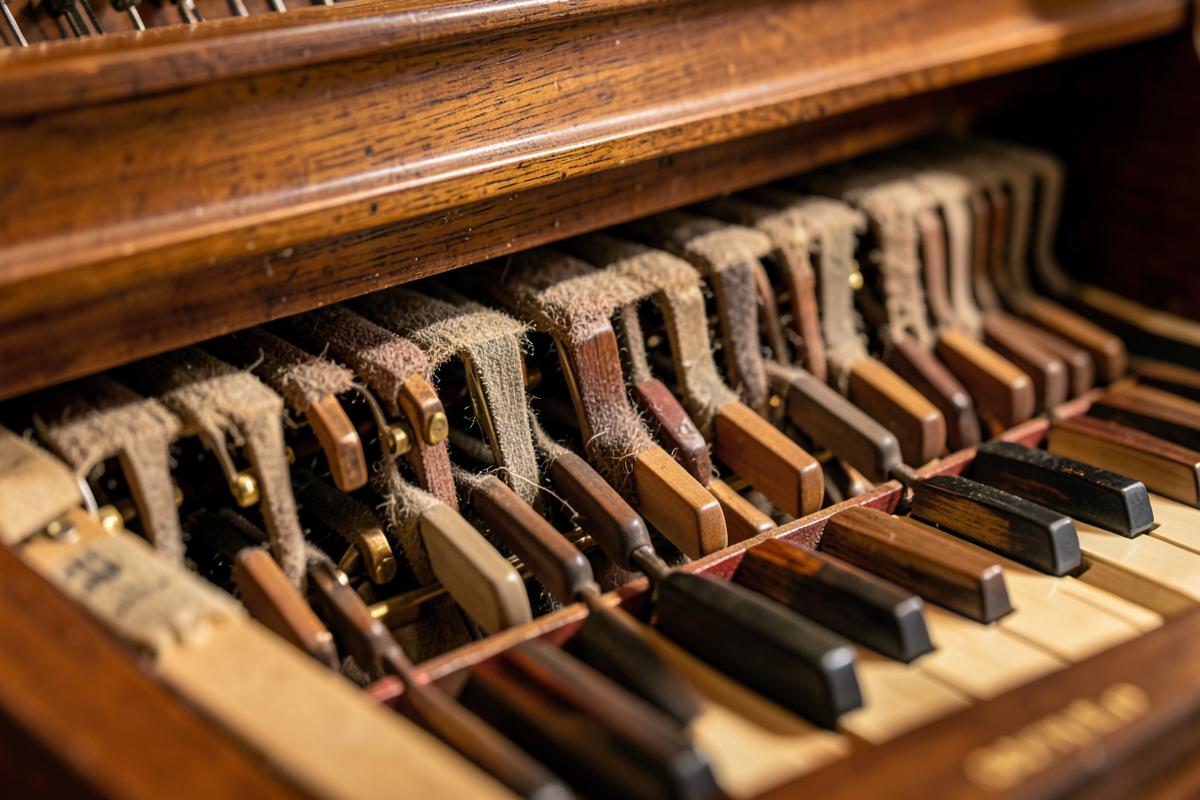
The right pedal lifts all dampers. If notes ring after release, the damper felts or the trapwork need adjustment.
The left pedal shifts a grand action sideways so hammers strike fewer strings; on an upright it moves hammers closer to the strings instead.
The middle pedal varies: sostenuto on better grands, bass sustain or a practice mute on many uprights.
Squeaks and clunks almost always come from dry trapwork bushings under the keybed, an inexpensive fix during a regular visit.
How we can help
If any of this describes your instrument, a service visit is the fastest way to know where you stand. We inspect, explain what we find, and quote before doing anything. Call (303) 425-5672 or request a quote.
More guides
- How Often Should You Tune a Piano?
- Piano Humidity Control in Colorado Homes
- Sticking Piano Keys: Causes and Fixes
- Upright vs Grand: Maintenance Differences
- What to Check Before Buying a Used Piano
- Why Piano Strings Break and What It Costs
- Moving a Piano Without Damaging It
- Everyday Piano Cleaning and Care
- Is My Piano Worth Restoring?
Ready to hear your piano at its best?
Same-week appointments across Arvada and the Denver metro area.